Many small business owners experience the same frustration:
“I’m busy all day, but my business isn’t really growing.”
This isn’t a motivation issue. It’s not about effort. It’s about structure.
Businesses that scale successfully are built on systems that support growth — not constant manual work. This guide explains how scaling actually works and how small businesses can grow sustainably without overwhelm.
What Scaling Means for Small Businesses
Scaling is not just growth.
Scaling means increasing revenue without increasing workload at the same rate.
If more customers automatically lead to:
- more messages to answer
- more manual bookings
- more pressure on the owner
Then the business is growing — but it is not scalable.
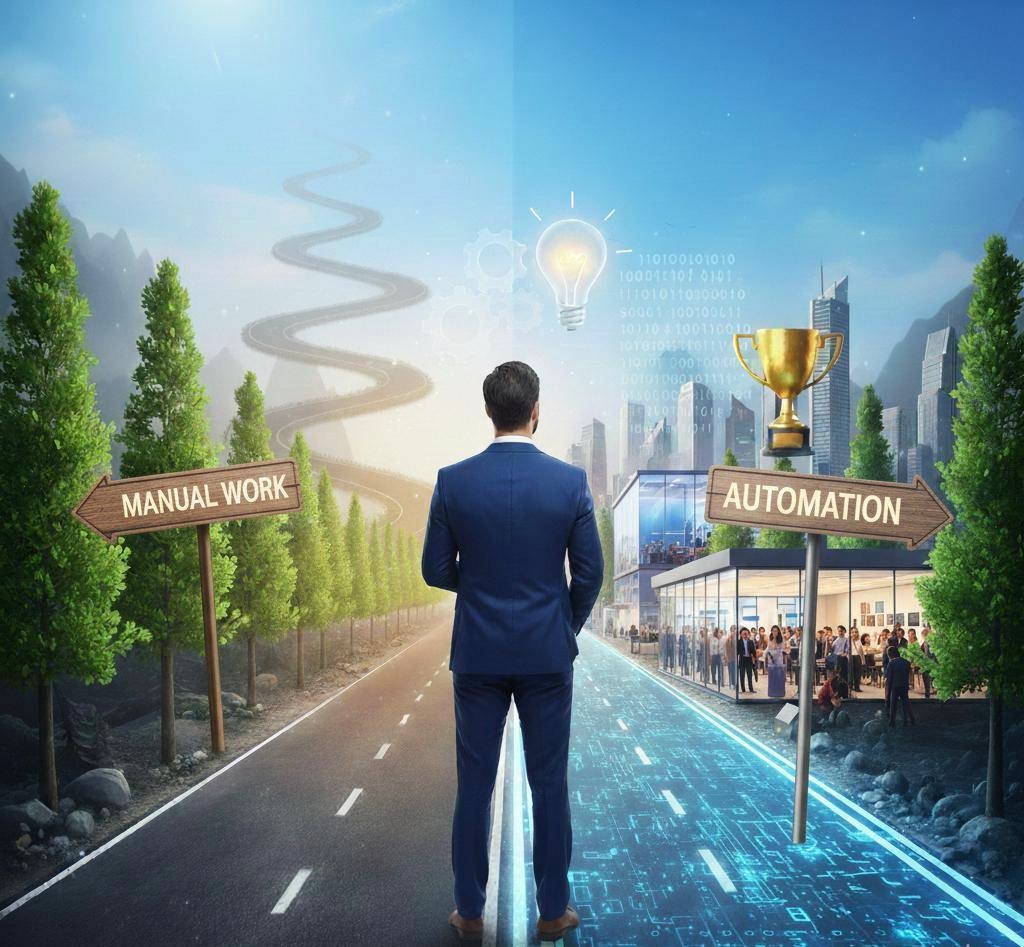
True scaling happens when growth is supported by repeatable systems, clear processes, and intelligent automation.
Why Being “Busy” Often Blocks Growth
Being busy can feel productive, but it often signals deeper problems:
- Repeated customer questions
- Manual responses to every enquiry
- Bookings that depend on availability to reply
This creates a ceiling. Once reached, growth slows, quality drops, or burnout appears.
Scalable businesses remove this ceiling by design, not by working longer hours.
Step 1: Turn Repetition Into Systems
Every scalable business begins by identifying repeated actions and turning them into systems.
Ask yourself:
- Do customers ask the same questions repeatedly?
- Do bookings follow the same steps every time?
- Do enquiries arrive through the same platforms?
If the answer is yes, those tasks should not rely on memory or constant attention.
Focus on systemising:
- Customer enquiries
- Booking and scheduling
- Frequently asked questions
Systems create consistency. Consistency creates scale.
Step 2: Make Your Business Easy to Understand and Easy to Buy From
Businesses scale faster when customers:
- Immediately understand what you offer
- Know the next step without asking
- Can take action without waiting
Confusion creates friction. Friction reduces trust and slows growth.
Clarify:
- Your main service
- Who it is for
- How customers get started
One clear journey converts better than many unclear options.
Step 3: Reduce Manual Work With Smart Automation
Automation is not about removing human touch. It’s about removing avoidable manual effort.
High-performing small businesses automate:
- Initial responses to enquiries
- Booking confirmations
- Common customer questions
- Follow-up messages
The result:
- Faster response times
- Consistent communication
- More time for strategic work
Automation supports growth without sacrificing quality.
Step 4: Turn Customer Questions Into Always-Available Support
Repeated questions are valuable signals.
Instead of answering them again and again, scalable businesses:
- Answer them once
- Make them instantly accessible
- Keep them available across platforms
This:
- Reduces response delays
- Prevents missed opportunities
- Builds trust through instant clarity
Customers feel supported — even when the business owner is not immediately available.
Step 5: Grow Revenue Without Adding More Hours
The most successful small businesses don’t scale by doing more. They scale by doing smarter.
They:
- Increase value per customer
- Improve retention
- Reduce time spent per transaction
When systems handle routine work, owners can focus on decisions that actually grow the business.
The Most Common Scaling Mistake
The biggest mistake small businesses make is trying to grow before building systems.
This often leads to:
- Burnout
- Inconsistent customer experience
- Lost leads and missed revenue
Sustainable scaling feels structured and controlled — not chaotic.
How Automation Supports Sustainable Business Growth
Smart automation allows small businesses to:
- Respond instantly, even outside working hours
- Handle multiple enquiries at the same time
- Maintain quality as demand increases
This approach is no longer reserved for large companies. It is how modern small businesses scale efficiently and sustainably.
Final Thought
If your business feels busy but stuck, the issue isn’t effort. It’s the absence of systems.
Scaling doesn’t begin with hiring more people or working longer hours. It starts by building a business that can grow without relying on constant manual input.
That’s where smart automation becomes a turning point — not as a sales tactic, but as a structural advantage.